Benefits of ChatGPT in Legal Services | Lexemo Blog
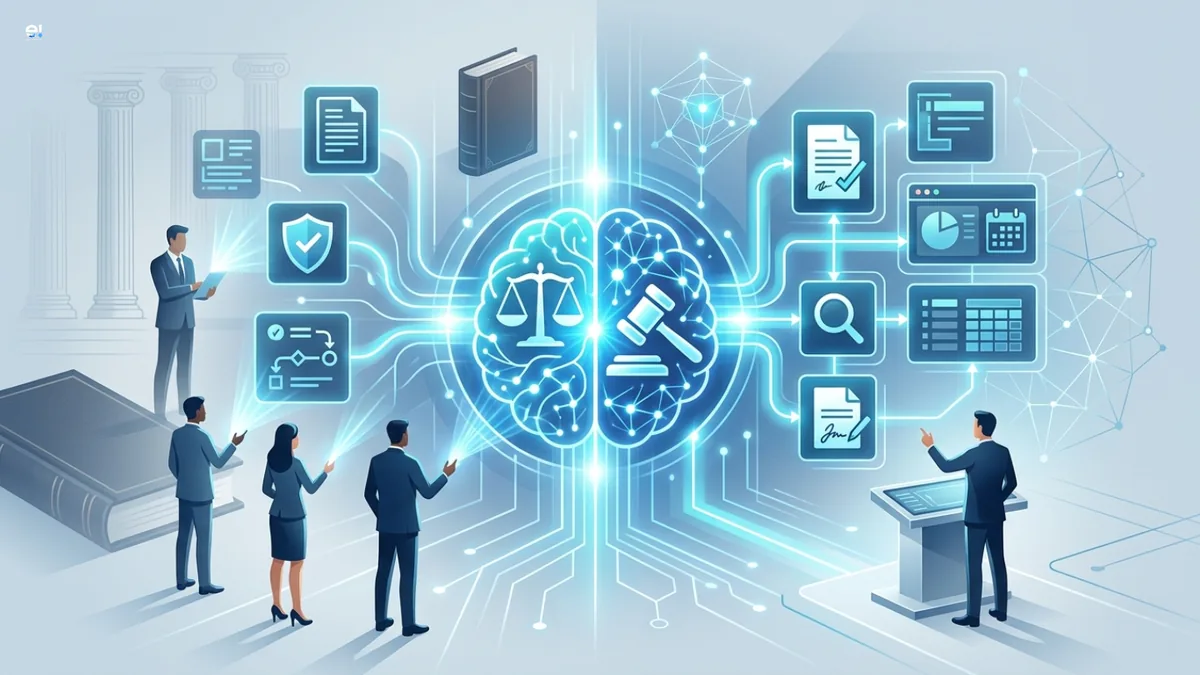
The benefits of ChatGPT in the Legal Industry are immense. Technological advancements, including artificial intelligence, are transforming the legal landscape. ChatGPT, an advanced language model developed by OpenAI, is a prime example of this transformation.
What is ChatGPT?
ChatGPT is a large language model that can understand and generate human-like text. It’s trained on vast amounts of text data, enabling it to:
- Understand context and nuance
- Generate coherent, relevant responses
- Adapt to different topics and styles
- Learn from conversational interaction
Benefits for Legal Practice
Research Efficiency
ChatGPT can rapidly:
- Summarize legal concepts
- Explain complex regulations
- Identify relevant considerations
- Provide starting points for deeper research
Drafting Assistance
AI helps with initial drafts:
- Standard contracts and agreements
- Legal correspondence
- Internal memoranda
- Policy documents
Client Communication
Enhanced client service through:
- Initial inquiry responses
- FAQ handling
- Status updates
- Educational content
Knowledge Management
Organizational benefits include:
- Document summarization
- Information retrieval
- Training material creation
- Best practice documentation
Concerns and Limitations
Accuracy Issues
ChatGPT can generate plausible-sounding but incorrect information — a risk highlighted in our article on AI legal citations gone wrong:
- Always verify AI outputs
- Don’t rely on AI for final legal advice
- Use as a starting point, not a conclusion
Confidentiality
Data sent to AI systems raises concerns:
- Understand data handling policies
- Use appropriate security measures
- Consider on-premises solutions for sensitive work
Professional Responsibility
Ethical obligations remain, as discussed in our piece on ethical generative AI in law:
- Supervise AI-generated work
- Take responsibility for outputs
- Maintain professional standards
Best Practices for Implementation
- Start with low-risk applications to build understanding
- Establish review processes for AI-generated content
- Train staff on appropriate use
- Document policies for AI in your organization
- Stay informed about evolving capabilities and risks
ChatGPT and similar tools offer tremendous potential for legal practice. Success requires thoughtful implementation that maximizes benefits while managing risks responsibly. For a deeper dive, read our whitepaper on AI contract analysis.
Ready to automate your legal workflows?
Discover how e! can transform your legal operations with no-code automation.