Gemini Embedding 2: Unified Legal AI Search Across All Formats
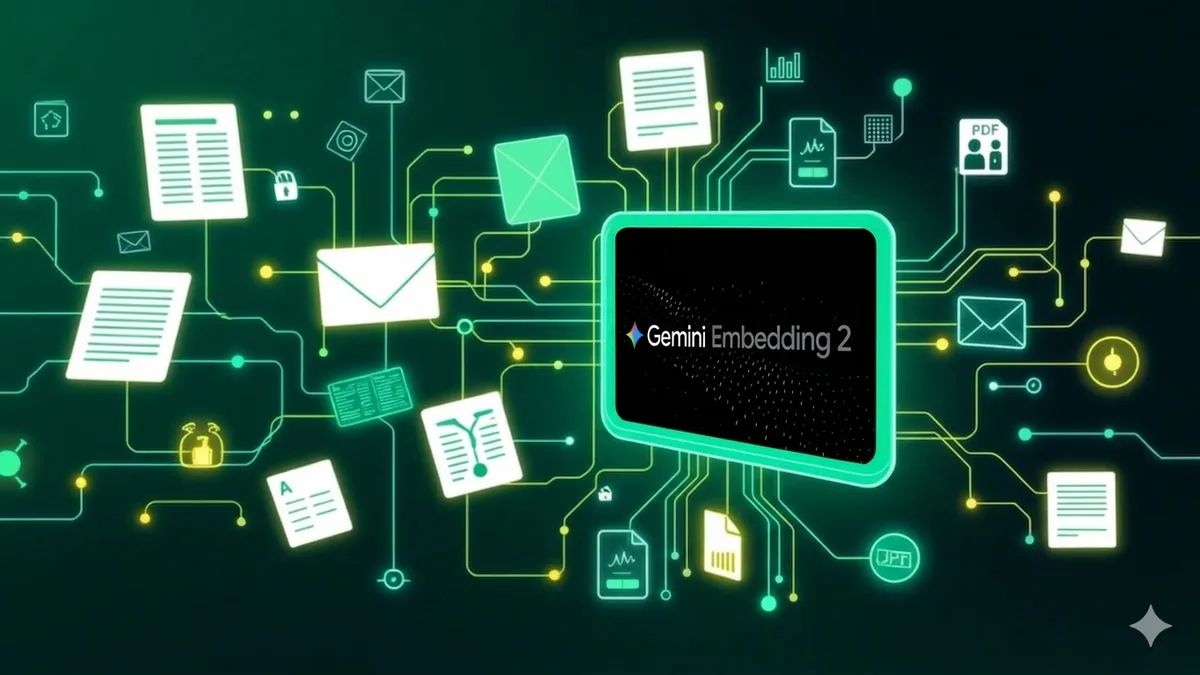
Gemini Embedding 2: Google’s Answer to Legal AI Search Silos
Author: Pascal Di Prima, Founder & CEO, Lexemo
Category: Industry Analysis
Published: 18 March 2026
Most legal teams have a search problem they have learned to live with. Not because it is minor — it quietly costs enormous amounts of time every week — but because it has always looked like one of those irreducible inefficiencies of legal work.
Contracts live in one system, email threads in another, deposition recordings somewhere else, scanned court exhibits in a separate folder, regulatory PDFs in a location no one has fully organised.
Finding something specific means knowing which system to open, which tool to run, and which keywords to try. More often than not, it means asking someone to spend a day on it manually.
This is beginning to change in a meaningful way.
Google released Gemini Embedding 2 in March 2026 — the first embedding model built on the Gemini architecture that handles text, images, audio, video, and documents in a single unified system.
For legal teams, the implications are more practical than they might first appear.
What Embeddings Actually Do
When an AI system processes a document, it converts the content into a mathematical representation capturing meaning.
This enables semantic search beyond keywords.
For example, “limitation of liability” and “cap on damages” are treated as closely related.
Embeddings are the foundation of modern legal AI, and understanding how different AI models handle them matters for choosing the right tool. The quality of retrieval determines the quality of the answer.
A wrong retrieval leads to a wrong — or incomplete — answer.
The Core Limitation Legal Teams Have Been Working Around
Until recently, each content type required its own embedding model.
Text, images, and audio all existed in separate systems, making cross-format search impossible.
The result is fragmented information architecture.
Legal teams use multiple tools for different formats — email, multimedia, scanned documents, and shared drives.
Large parts of institutional knowledge remain unsearchable.
What Makes Gemini Embedding 2 Different
Gemini Embedding 2 unifies all formats into one system.
- Multimodal input: Process text, images, and audio together
- Task-specific optimisation: Improves retrieval precision
- Native audio: No transcription required
- Built-in PDF & OCR: Handles scanned documents directly
- Adjustable dimensions: Balance cost and precision
What Unified Multimodal Search Makes Possible
A single query can search across all formats simultaneously — text, images, audio, video, and PDFs.
This fundamentally changes what is searchable.
Three Use Cases Where This Changes Legal Work
eDiscovery Across All Evidence Formats
A single query searches emails, PDFs, images, and audio simultaneously, transforming the eDiscovery process.
This reduces the risk of missing critical evidence.
Contract and Clause Retrieval by Meaning
Semantic search finds clauses based on meaning, not wording.
This improves accuracy in large-scale contract analysis.
Compliance Monitoring Across Every Format
Search across regulatory PDFs, web content, audio, and internal documents in one step.
This enables truly comprehensive compliance oversight.
A Practical Note on Precision and Cost
Embedding depth can be adjusted depending on the use case.
Lower precision means faster and cheaper processing.
Higher precision delivers more accurate results.
What Legal Teams Should Do With This
Audit where your information lives in silos.
- Which formats cannot be searched together?
- Where do parallel workflows exist?
- What knowledge is currently invisible?
The decisions you make now will determine what your AI systems can find in the future.
A text-only system is no longer enough.
The leading organisations think in terms of their full information ecosystem. Explore how AI integration can unify your legal search capabilities.
Frequently Asked Questions
What is Gemini Embedding 2, and how does it change AI-powered search for legal teams?
Gemini Embedding 2, released by Google in March 2026, is the first embedding model built on the Gemini architecture that processes text, images, audio, video, and documents in a single unified system. For legal teams, it ends the fragmented search problem where contracts, emails, deposition recordings, and regulatory PDFs each required a separate system and manual coordination to search together.
What is the difference between keyword search and semantic embedding search in contract review, and why does it matter for identifying missing clauses?
Keyword search retrieves only exact matches; semantic embedding search retrieves by meaning, so “limitation of liability” and “cap on damages” are recognised as closely related. In contract review, this matters because the quality of retrieval determines the quality of the answer: a wrong retrieval produces a wrong or incomplete answer, meaning missing clauses can go undetected if only keyword search is used.
How does Gemini Embedding 2’s native audio processing eliminate the transcription step that currently slows down legal eDiscovery across depositions and call recordings?
Gemini Embedding 2 processes audio natively with no transcription required. For legal eDiscovery, this eliminates the separate transcription step that previously had to precede any search across depositions and call recordings. A single query can now search audio simultaneously with emails, PDFs, and scanned documents, reducing the risk of missing critical evidence that previously lived in unsearchable audio format.
Why does keeping legal information in separate format-specific silos increase the risk of missing critical evidence in litigation or regulatory review?
Keeping legal information in format-specific silos, with contracts in one system, email threads in another, and audio recordings elsewhere, means a single query cannot search across all formats simultaneously. In litigation or regulatory review, this increases the risk of missing critical evidence. Gemini Embedding 2 eliminates silos by processing text, images, audio, video, and PDFs in one unified retrieval system.
How does adjusting embedding dimension depth affect the cost and accuracy tradeoff for large-scale legal document retrieval?
Embedding dimension depth is adjustable depending on the use case. Lower precision means faster and cheaper processing, suitable for high-volume searches where speed matters. Higher precision delivers more accurate results, suited for complex legal retrieval where missing a relevant clause or document carries risk. Legal teams can tune this balance based on the sensitivity of each retrieval task.
Ready to automate your legal workflows?
Discover how e! can transform your legal operations with no-code automation.