AI Automation for Lawyers: The Power of Vibe Coding
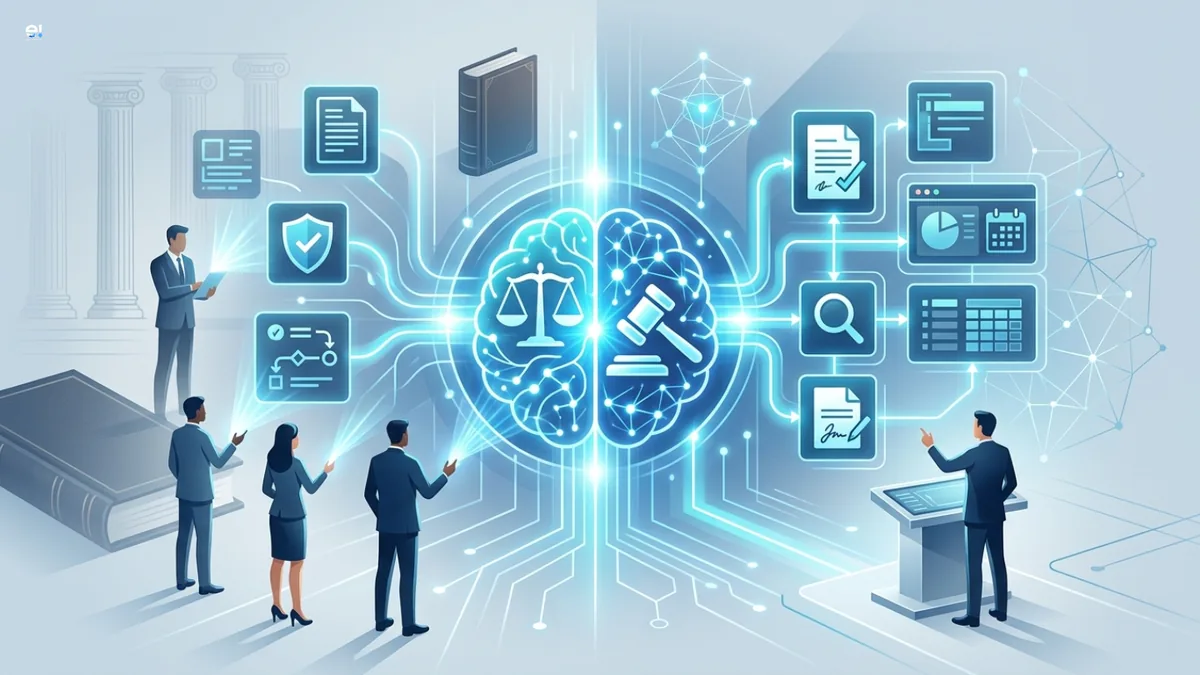
Vibe Coding: Build Your Own Legal AI Tools Without Code
Something significant is happening in legal practice, and it does not require a software budget or a development team. Lawyers are building their own AI-powered tools. And they are doing it in an afternoon.
This is vibe coding in legal tech. It is one of the most important shifts the profession has seen in years, and it is already inside the world’s largest law firms.
What makes this shift particularly important is not just speed — it is accessibility. Legal workflow automation is no longer limited to those with technical resources. It is becoming a core capability of legal professionals themselves.
What Is Vibe Coding?
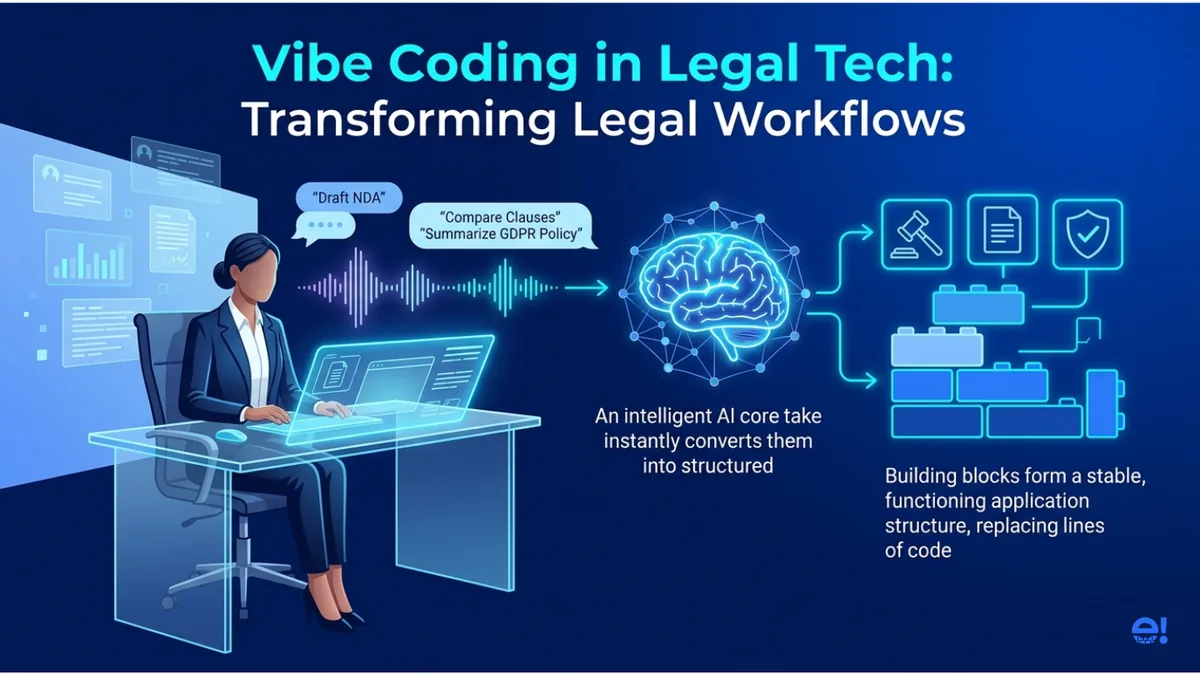
Vibe coding is a method of building software without traditional programming skills. You describe what you want in plain language. An AI system writes the code. You test it, refine it, and deploy it.
The term was coined by computer scientist Andrej Karpathy in early 2025. Within months it became a movement. Merriam-Webster listed it as a trending term, and Collins English Dictionary named it Word of the Year by December 2025.
For most industries, vibe coding is a productivity tool. For the legal profession, it is something more significant: a redistribution of who gets to build technology. And that changes everything.
To understand its practical impact, it helps to break down how this approach translates into real legal workflow automation.
How Vibe Coding Works in Legal Workflow Automation
- Define the legal problem
- Describe the workflow in natural language
- Let AI generate the logic or code
- Test outputs and refine prompts
- Deploy into real legal workflows
This structured approach turns abstract ideas into functional legal AI tools in a matter of hours rather than weeks.
Vibe Coding in Legal Tech: What Lawyers Are Already Building
Legal professionals are already using vibe coding to solve real practice problems. Community platforms like vibecode.law showcase lawyer-built tools. Common examples include:
- Clause checkers that flag missing contract provisions
- GDPR policy comparators for compliance teams
- Redline simplifiers that describe changes in plain English
- Email summarisers that generate timelines from message threads
- Signature packet automation tools
None of these required formal technical training. They required clear process awareness, an understanding of the problem, and iterative prompting. This is legal workflow automation at a level of accessibility that simply did not exist before.
Mainstream legal institutions have taken notice. Washington University Law School and the New York State Bar Association now offer CLE courses teaching lawyers to build software through prompting. Vibe coding in legal tech has moved from weekend experiment to professional skill.
A Real-World Example: Jamie Tso at Clifford Chance
Jamie Tso is a Senior Associate in the APAC Private Funds Group at Clifford Chance in Hong Kong. He is also one of the most compelling examples of what vibe coding in legal tech looks like in practice.
Without a dedicated development team, Tso independently built a range of working legal AI tools. His AI-powered redlining tool RedlineNow was built and shipped in just two days. He followed this with a bulk document analysis and review app, and a signature packet automation tool. Some of his tools went viral internally at Clifford Chance and were adopted firm-wide. His open-source repositories have been forked over a hundred times by legal teams using them in their own workflows.
He also launched the LegalQuant Hackathon, which produced twenty working legal tech applications within its first week.
The best lawyers of the next decade will not just be exceptional at legal reasoning. They will know how to translate that reasoning into tools that make their practice sharper, faster, and more scalable.
What makes Tso’s story significant is not only the tools he has built. It is what they signal: the barrier between legal expertise and legal technology is disappearing. The question is who will be ready when it is gone.
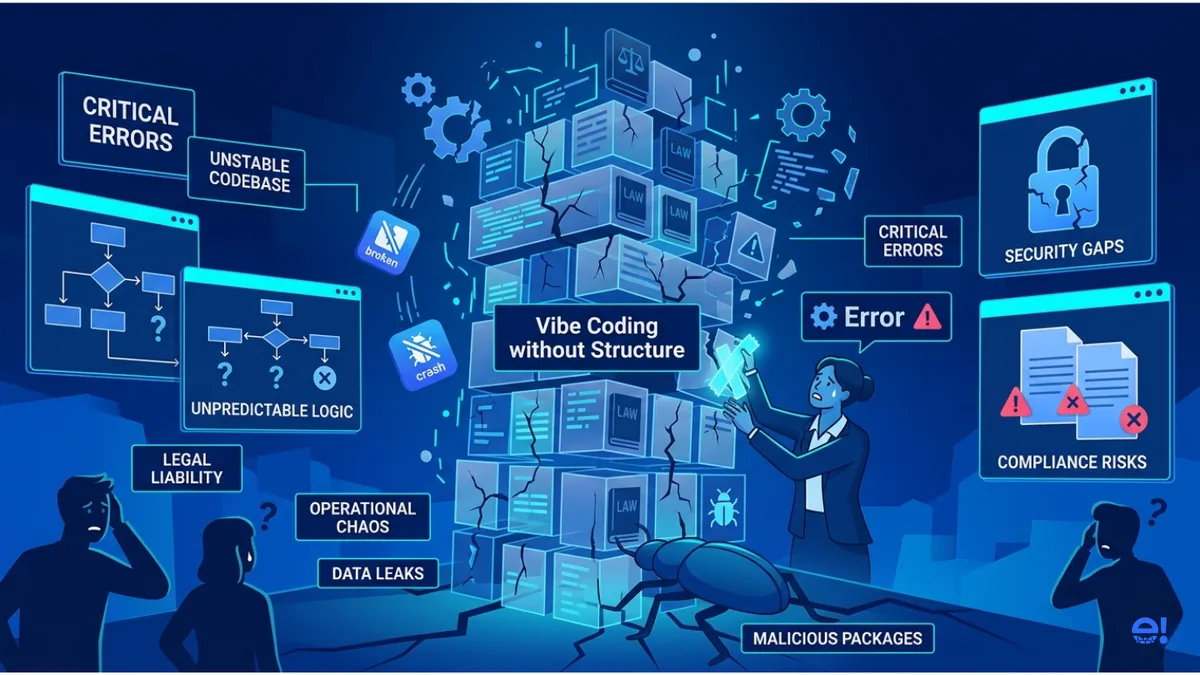
The Risks of Vibe Coding Without Structure
The opportunity is real. So are the risks. And in law, the stakes for getting it wrong are higher than in almost any other profession.
Research published by Coderabbit in December 2025 analysed 470 open-source projects and found that AI co-authored code contained 1.7 times more major issues than human-written code. Security researchers have also flagged a risk called slop squatting, where attackers create malicious packages with names similar to legitimate ones, knowing AI systems will unknowingly incorporate them into generated code.
For most industries, a flawed tool means a bad user experience. For lawyers, it can mean a compliance gap, a missed obligation, or a liability. The enthusiasm around vibe coding in legal tech is well-founded. But it must be matched with the kind of professional judgement that legal practice has always demanded.
For a thorough analysis of the risks and governance challenges, read: Vibe Coding in Legal Tech: The Good, the Bad, and the Ugly (Agiloft).
For a broader perspective on what vibe coding means for legal tech economics, read: Vibe Coding Lawyers and the New Economics of Legal Tech (Artificial Lawyer).
Legal Workflow Automation Done Right: Automate 2.0 by Lexemo
This is the challenge Automate 2.0 by Lexemo was built to address. The goal is not to hand lawyers a blank AI canvas and step back. The goal is to give legal professionals a structured, secure environment designed specifically for legal workflows. One that combines the flexibility to automate what matters with the guardrails that a regulated profession requires.
Lexemo’s platform enables legal professionals to build their own AI-powered and rule-based digital tools without writing a single line of code. It bridges the gap between traditional legal workflows and the AI-powered future, and it does so in full compliance with GDPR and the EU AI Act.
The difference between vibe coding as a weekend experiment and vibe coding as a genuine competitive advantage in legal practice comes down to one thing: structure. Automate 2.0 provides that structure, so lawyers can build with confidence rather than risk.
Explore what Automate 2.0 can do for your legal workflows.
Build Smarter. Not Just Faster.
Vibe coding in legal tech is not a passing trend. It is the beginning of a fundamental shift in who builds legal technology and how. Lawyers who engage with this shift thoughtfully, who develop the judgement to know when to build, what to build, and how to build responsibly, will have a real advantage in the years ahead.
The power to build is now available to every lawyer. The question is whether the tools you build are ones you can stand behind. That is the standard Automate 2.0 was designed to meet.
Frequently Asked Questions
What can a lawyer realistically build with vibe coding, and what does it take to get started?
A lawyer using vibe coding can build clause checkers that flag missing contract provisions, GDPR policy comparators, redline simplifiers, email summarisers, and signature packet automation tools. Getting started requires no development team — experimenting is faster and easier than most lawyers expect.
What are the specific security risks of vibe coding in legal practice, and how does Automate 2.0 by Lexemo mitigate them?
Vibe coding in legal practice risks two documented threats: a December 2025 Coderabbit study found AI co-authored code contains 1.7 times more major issues than human-written code, and slop squatting allows attackers to plant malicious packages in AI-generated code. Automate 2.0 by Lexemo addresses both by providing a structured legal workflow environment built for GDPR and EU AI Act compliance.
Can a lawyer really build a working legal AI tool without a development team?
Yes. Jamie Tso, a Senior Associate at Clifford Chance in Hong Kong, built his AI-powered redlining tool RedlineNow in two days without a development team, and it was adopted firm-wide. Getting started means picking a clear use case, describing the logic in plain language, and iterating quickly. Experimenting is faster and easier than most lawyers expect.
What did the Coderabbit 2025 study find about AI-generated code, and why does it make ungoverned vibe coding especially risky for lawyers?
A December 2025 Coderabbit study analysed 470 open-source projects and found that AI co-authored code contained 1.7 times more major issues than human-written code. For lawyers, this matters because a flawed legal tool is not just a bad user experience: it can create a compliance gap, a missed obligation, or a liability that falls on the lawyer rather than the AI.
What is slop squatting, and why does it pose a specific threat to lawyers who use vibe coding without a structured platform?
Slop squatting is a cyberattack where attackers create malicious packages with names similar to legitimate libraries, knowing AI systems will incorporate them into generated code. For lawyers without a structured platform, a vibe-coded tool could expose client data or create a compliance breach undetected. Automate 2.0 by Lexemo provides a governed legal workflow environment designed to eliminate this attack surface.
Ready to automate your legal workflows?
Discover how e! can transform your legal operations with no-code automation.